
One of the most significant challenges in today’s ever-changing health care landscape is leveraging artificial intelligence (AI) while protecting patient privacy and supporting broader access to high-quality care. As the technology rapidly evolves, institutions at the forefront of innovation are turning to researchers who can bridge leading-edge engineering with real-world clinical impact.
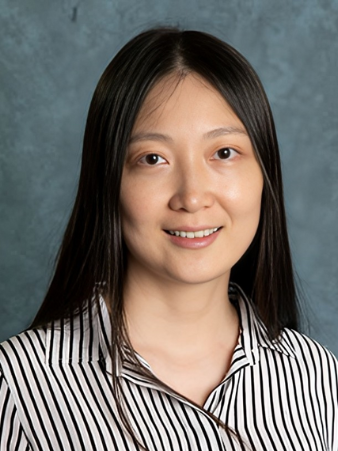
Associate professor at Texas A&M University School of Engineering Medicine (EnMed), Dr. Yanmin Gong’s innovative work in federated learning, a technology that enables hospitals to collaboratively train AI models without sharing raw patient data, has established her as a leading expert in developing trustworthy, accessible AI solutions for health care.
Gong now joins the faculty of the Texas A&M University School of Engineering Medicine (EnMed) as an associate professor, bringing her expertise to an institution dedicated to engineering a new era of health care. Her arrival reflects EnMed’s goal to position itself as a leader in engineering-driven medical innovation.
Research Expertise and Impact
Gong holds a bachelor’s, master’s, and Ph.D. in computer engineering, providing her with a deep foundation in machine learning, systems design, and optimization. Throughout her career, she has consistently applied this technical expertise to practical solutions, developing federated learning systems that enable secure collaboration across health care institutions without compromising patient privacy.
Her current research integrates federated, multimodal, and generative AI to create adaptive systems that improve clinical decision-making and promote better patient outcomes.
“What inspires me most is seeing how these engineering breakthroughs make previously impossible health care applications feasible — from using wearable data for early disease detection to enabling precision medicine for rare conditions through learning across multiple populations,” she said.
“Witnessing engineering’s tangible impact on improving human health motivates and grounds my work every day.”

Recognition and Vision for EnMed
“Tomorrow’s physicians, equipped with advanced engineering and AI tools, will revolutionize diagnosis, treatment, and patient care — ultimately improving quality of life around the globe,” Gong said. “This vision resonates with EnMed’s mission, and it’s the core reason that drew me to join this innovative community.”
Throughout her career, Gong has earned numerous awards and honors for her leadership in responsible and privacy-preserving AI. These include the NSF CAREER Award, Cisco Faculty Research Award, IEEE TCSC Early Career Excellence Award in Scalable Computing, NIH mHealth Scholar designation, and recognition as a Rising Star in Networking and Communications from N2Women.
Her research has been supported by leading agencies, including the National Science Foundation, National Institutes of Health, Cisco, Department of Energy, and Air Force Research Laboratory.
At EnMed, Gong plans to establish a collaborative research lab focused on responsible and accessible AI for health care — connecting engineering, medicine, and data science within the Texas Medical Center ecosystem. She is committed to mentoring future physicianeers and fostering partnerships among faculty, hospitals, and industry leaders.
“My central focus is to advance trustworthy and accessible AI for health care. I am committed to developing systems clinicians and patients can rely on — technologies that safeguard privacy, fairness, and safety, and that function well even in data-limited or resource-constrained environments,” she said.
A Bridge Between Disciplines
For Gong, AI is more than an algorithmic advancement; it’s a bridge between disciplines and a catalyst for human-centered care. Gong says, “My work combines theoretical rigor with real-world impact, aligning perfectly with EnMed’s interdisciplinary mission.”
With her expertise, leadership, and commitment to responsible innovation, Gong exemplifies the excellence that defines EnMed’s faculty and the transformative potential of engineering medicine’s next frontier.